
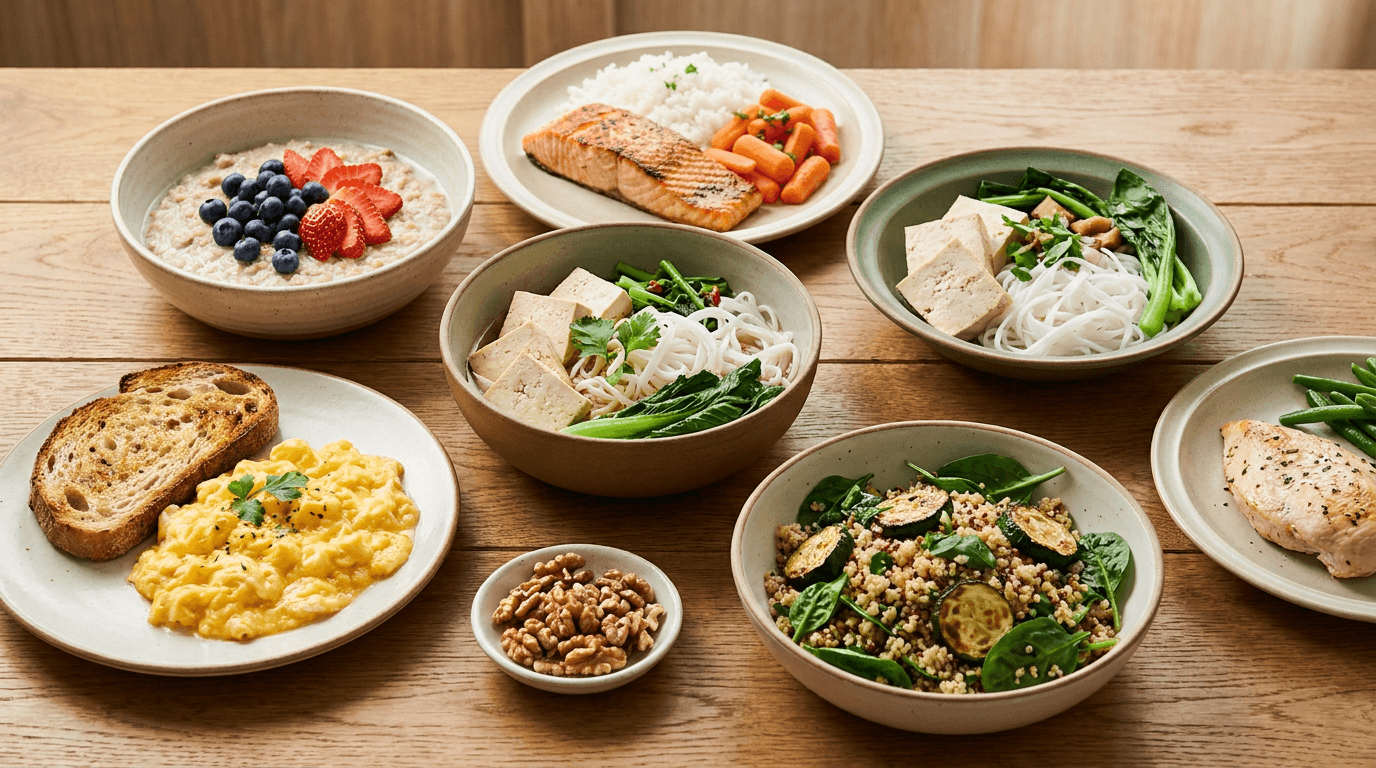
Starting the elimination phase can feel like staring at an empty plate. You know onion and garlic are out, but what actually goes into breakfast, lunch, and dinner for a whole week? This 7-day low-FODMAP meal plan gives you a ready-made template so you can stop second-guessing every meal and focus on how your gut responds.
Think of it as training wheels, not a rulebook. It is a starting point built around widely tolerated low-FODMAP foods, and you should adjust it to your own tastes, budget, and any foods you already know bother you. It is not medical advice, and it does not replace a dietitian.
How this low-FODMAP meal plan works
The elimination phase is the first step of the low-FODMAP diet. For two to six weeks you lower your total FODMAP intake to calm symptoms and get a clean baseline. You are not cutting FODMAPs forever, and you are not testing anything yet. That comes later in reintroduction.
A good low-FODMAP meal plan leans on naturally low-FODMAP staples: most plain proteins, many grains, lactose-free dairy, and a rotating cast of tolerated fruits and vegetables. Plain chicken breast, salmon, eggs, and firm tofu carry no FODMAPs at all, which makes them reliable anchors for almost any meal.
Two habits make the week run smoothly. First, batch-cook a grain and a protein on day one. Second, keep low-FODMAP snacks visible so you are not caught hungry near a vending machine full of garlic-and-onion everything.
The 7-day plan
Portions matter as much as the food itself, so keep servings sensible and check anything you are unsure about on the food database. Swap freely between days if a meal doesn't suit you.
| Day | Breakfast | Lunch | Dinner | Snack |
|---|---|---|---|---|
| Mon | Oats with lactose-free milk and blueberries | Chicken breast with white rice and carrot | Salmon with quinoa and steamed bok choy | Small handful of walnuts |
| Tue | Scrambled eggs on spelt sourdough | Firm tofu and rice noodle bowl with carrot | Beef stir-fry with white rice and broccoli (small serving) | Strawberry with lactose-free yogurt |
| Wed | Oats with peanut butter and banana (unripe) | Leftover salmon with potato and salad | Grilled chicken breast with polenta and zucchini | Rice cake with cheddar |
| Thu | Lactose-free yogurt with kiwifruit | Tuna with brown rice and carrot | Firm tofu curry with white rice | Small handful of macadamia |
| Fri | Eggs with spinach and sourdough | Chicken and quinoa salad with feta | Cod with roasted potato and green beans | Orange |
| Sat | Oats with strawberry and chia | Rice noodle bowl with prawns and bok choy | Beef and vegetable stir-fry with rice | Blueberries with pecans |
| Sun | Sourdough with peanut butter and banana | Leftover cod with quinoa and salad | Roast turkey with potato and carrot | Lactose-free yogurt |
Vegetables like broccoli, zucchini, and green beans are low-FODMAP in modest amounts, so stick to a small serving rather than piling the plate. Fruits work best one portion at a time and spaced across the day rather than eaten together.
Watch the stack effect
Here is the trap that catches most people on a low-FODMAP meal plan: the stack effect. Each FODMAP-containing food has a serving size that stays low, but those amounts add up if you eat several in one sitting. A little avocado, a few blueberries, and a slice of wheat-free bread might each be fine alone, yet together they can push your total FODMAP load into symptom territory.
Two rules keep the stack in check. Spread FODMAP-containing foods across the day instead of clustering them at one meal, and keep servings to a single portion rather than doubling up because something "is low-FODMAP." When a meal combines several borderline ingredients, treat the whole plate as the unit, not each item.
This is also why plain proteins are such useful anchors. Building meals around salmon, eggs, chicken breast, or firm tofu gives you a zero-FODMAP base, leaving room to add a controlled portion of grain and vegetables without tipping over.
Common mistakes to avoid
- Hidden onion and garlic. Stocks, marinades, sauces, and pre-mixed spice blends are the usual offenders. Cook from scratch where you can, and use garlic-infused oil for flavor since the FODMAPs don't transfer to the oil.
- Oversized "safe" portions. Low-FODMAP is about amount, not just food choice. A cup of something is not automatically fine because a small serving was.
- Eating the same three meals all week. Variety protects your nutrition and your gut microbiome. Rotate your proteins, grains, and produce.
- Staying on elimination too long. This phase is diagnostic. Dragging it past six weeks narrows your diet without added benefit, and the real payoff comes from reintroduction.
Where to go from here
Once your symptoms settle on a plan like this, you have a clean baseline to start testing FODMAP groups one at a time. That reintroduction step is where you learn your personal triggers and rebuild the widest, most varied diet your gut can handle. The elimination phase is never the destination.
Because your triggers, tastes, and portion tolerances are your own, the best low-FODMAP meal plan is the one shaped to you. Building it by hand, cross-checking every serving, gets tedious fast.
Phase does that part for you. It builds your elimination-phase meal plan automatically, flags the stack effect before it hits your plate, and checks any food's serving size against published research with the citations shown. Download Phase and let it map your week so you can get on with feeling better.