
If you've been told you have IBS, that label only tells half the story. The part that shapes your day-to-day symptoms, and much of your diet, is your subtype. When people search for IBS subtypes (IBS-C, IBS-D and the rest), they usually want the same thing: to understand why their gut behaves the way it does, and what to actually do about it. Here's a clear, practical breakdown.
What the IBS subtypes are
Doctors sort irritable bowel syndrome into four subtypes based on one thing: what your stools look like on the days they're abnormal. The categories come from the Rome IV criteria, and they're scored using the Bristol Stool Chart, a 1-to-7 scale from hard, pebble-like stools (type 1) to entirely liquid (type 7).
- IBS-C (constipation-predominant): most abnormal stools are hard or lumpy (Bristol types 1–2).
- IBS-D (diarrhea-predominant): most abnormal stools are loose or watery (Bristol types 6–7).
- IBS-M (mixed): you get both hard and loose stools, often alternating within days or weeks.
- IBS-U (unclassified): your symptoms meet the criteria for IBS, but your stool pattern doesn't fit neatly into the other three.
The key detail people miss: subtyping looks only at your abnormal days, not your normal ones. And subtypes aren't permanent. It's common to shift from IBS-D to IBS-M, or between others, over time. That's why a rigid, one-size-per-subtype meal plan rarely holds up, and why a flexible approach works better.
IBS subtypes at a glance
| Subtype | Bristol stool pattern | Hallmark symptoms | Diet emphasis |
|---|---|---|---|
| IBS-C | Types 1–2 (hard, lumpy) | Straining, incomplete emptying, bloating | Gradual soluble fiber, fluids, low-FODMAP base |
| IBS-D | Types 6–7 (loose, watery) | Urgency, frequency, cramping | Identify FODMAP triggers, steady meal timing |
| IBS-M | Mix of 1–2 and 6–7 | Unpredictable swings, bloating | Consistency, trigger testing, careful fiber |
| IBS-U | Doesn't fit above | Variable, milder or intermittent | Same low-FODMAP framework, then personalize |
How management differs by subtype
All IBS subtypes share the same underlying features: a hypersensitive gut, altered motility, and often a strong gut-brain interaction. But the practical tweaks differ.
IBS-C
With constipation-predominant IBS, the goal is gentler, more complete transit. Soluble fiber is your friend here, but the emphasis is gradual, because ramping up fiber too fast can worsen bloating. Low-FODMAP sources of soluble fiber like oats, kiwifruit and chia seeds are good starting points. Adequate fluids and regular movement matter more for IBS-C than for other subtypes. A dietitian may also discuss specific fiber supplements or, with your doctor, laxatives suited to IBS-C.
IBS-D
For diarrhea-predominant IBS, the priority is calming urgency and firming things up. This is where FODMAPs, especially rapidly fermented ones, tend to cause trouble. Insoluble fiber and large, fatty meals can speed transit, so smaller, steadier meals often help. Lean proteins such as chicken breast, eggs and salmon are naturally FODMAP-free and sit well. Some people find caffeine a trigger, so if you rely on black coffee, watch how it affects your mornings. Your doctor may also suggest specific anti-diarrheal or gut-directed medications alongside diet.
IBS-M
Mixed IBS is the hardest to pin down because you're managing two opposite problems. Consistency becomes the main tool: regular meal timing, steady fiber intake, and careful attention to which foods precede which type of episode. Keeping a simple food-and-symptom log is especially valuable here, because triggers often only reveal themselves in patterns over time.
IBS-U
Unclassified IBS is essentially "you have IBS, but your pattern doesn't fit a box." The management approach is the same low-FODMAP framework, followed by structured testing to build a diet around your specific tolerances.
Why low-FODMAP helps across all subtypes
Here's the reassuring part. Whatever your bowel pattern, the same class of carbohydrates, FODMAPs (fermentable oligosaccharides, disaccharides, monosaccharides and polyols), tends to drive the shared symptoms: bloating, gas, distension and pain. FODMAPs pull water into the small intestine and are rapidly fermented by gut bacteria, producing gas. In a sensitive gut, that translates to symptoms regardless of whether you lean toward constipation or diarrhea.
That's why clinical research supports the low-FODMAP diet across IBS-C, IBS-D and IBS-M. It isn't a diet designed for one subtype; it's a systematic way to reduce the fermentable load, then rebuild.
The protocol runs in three phases:
- Eliminate (2–6 weeks): reduce high-FODMAP foods to settle symptoms and get a clean baseline.
- Reintroduce: test one FODMAP group at a time to see which ones your gut reacts to, and at what serving size.
- Personalize: build the widest, most varied diet your gut tolerates, keeping only the genuine triggers restricted.
This structure matters for every subtype because the reintroduce phase is where subtype-specific insight appears. An IBS-D person might discover that a small portion of avocado is fine but a large one triggers urgency, while an IBS-C person learns which fruits, like oranges or strawberries, they tolerate freely to support fiber and fluid intake.
Foods that tend to sit well
While your personal results come from testing, some foods are naturally low in FODMAPs and are useful staples during the eliminate phase across all subtypes:
- Proteins: firm tofu, beef, cod and eggs.
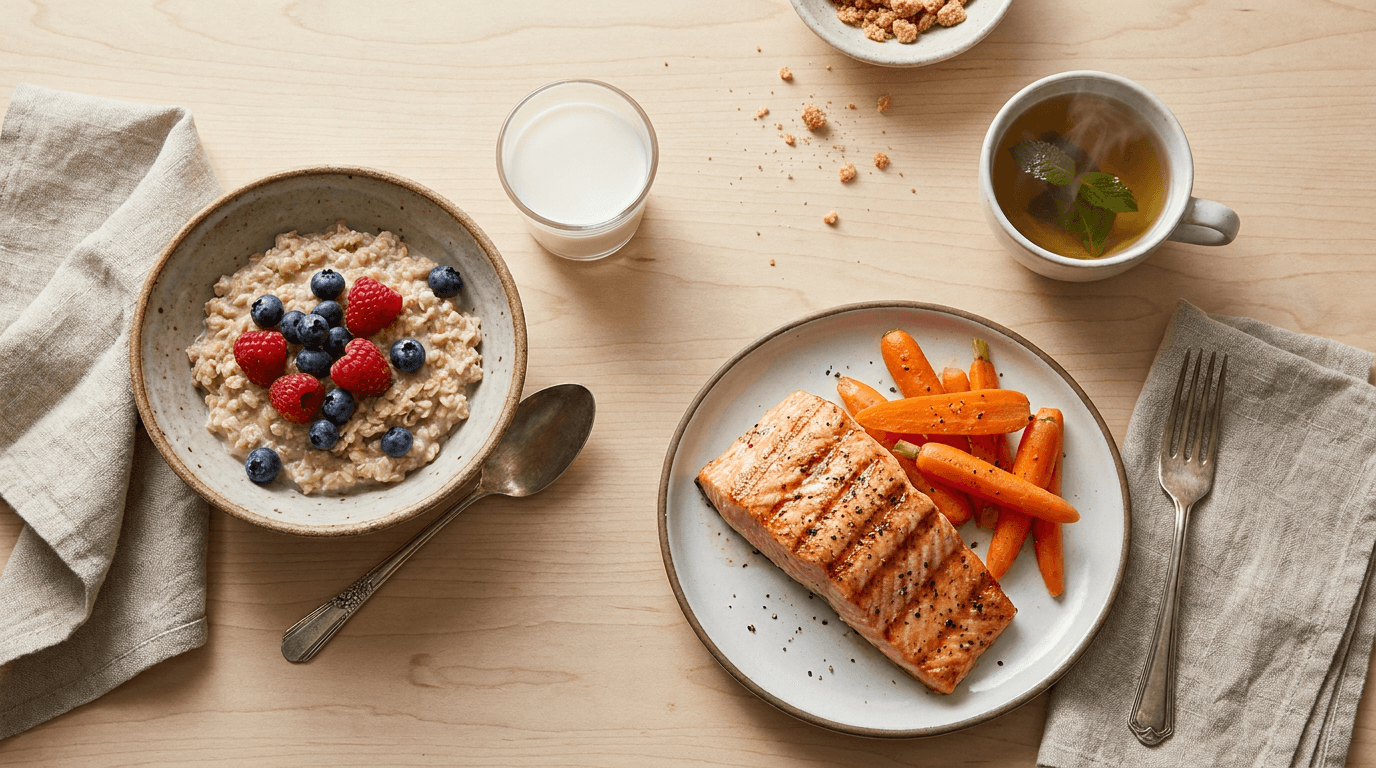
- Grains: brown rice, quinoa and oats.
- Fruits: blueberries, kiwifruit and firm banana.
- Dairy alternatives: lactose-free milk if regular dairy bothers you.
The two biggest universal culprits are garlic and onion, both high-FODMAP and hidden in countless sauces and ready meals. Learning to spot and swap them out is often the single most impactful change, no matter your subtype. You can check any food's serving thresholds in the food database rather than guessing.
The bottom line
Your IBS subtype, whether IBS-C, IBS-D, IBS-M or IBS-U, describes your dominant symptom pattern and guides the fine-tuning: more soluble fiber and fluids for constipation, steadier meals and trigger control for diarrhea, consistency for mixed. But the foundation is shared. A structured low-FODMAP approach reduces the fermentable load that fuels symptoms across every subtype, then helps you personalize.
If diarrhea is persistent, or you notice bleeding, unexplained weight loss or night-time symptoms, see a doctor, those aren't typical IBS and deserve investigation. For everyone else, the path forward is methodical, not restrictive.
Ready to find your own triggers instead of guessing? Get the Phase app to check serving sizes, log meals and walk the three-phase protocol step by step.