
Getting an IBS diagnosis often comes with a quiet, urgent question: does IBS go away? The honest answer is nuanced. IBS is considered a chronic, relapsing condition, which means it doesn't usually "disappear" the way a cold does. But that's not the whole story, and it's far from a life sentence. Many people reach long stretches with barely any symptoms, and with the right levers you can shift IBS from something that runs your life to something you barely think about.
The honest answer: chronic, but not fixed
IBS is a disorder of the gut-brain interaction. Your digestive system and your nervous system are wired together, and in IBS that communication gets oversensitive. Signals that most people never notice, like the normal stretch of the gut after a meal, can register as pain, urgency, or bloating.
Because this sensitivity is a feature of how your system is wired, it tends to stick around in the background. That's why doctors call it chronic. But "chronic" is not the same as "constant" or "getting worse." IBS doesn't damage your bowel, it doesn't raise your risk of cancer, and it doesn't shorten your life. What it does is fluctuate. You'll have calm periods and flare periods, and the goal of good management is to make the calm periods longer, more predictable, and more comfortable.
So when people ask "does IBS go away," a more useful way to frame it is: can IBS symptoms go into remission and stay manageable? For a great many people, yes.
What "remission" really looks like
Remission in IBS doesn't mean you're cured. It means your symptoms fade into the background for weeks, months, or longer. Some people go a full year or more with only the occasional mild off-day. Others notice their IBS mostly shows up during stressful seasons and stays quiet the rest of the time.
Research on the natural course of IBS shows a mixed but hopeful picture. Over several years, a meaningful share of people see their symptoms improve substantially, some no longer meet the criteria for IBS at all, and symptoms can shift in type (for example, from diarrhea-predominant to a milder mixed pattern). The takeaway isn't that IBS reliably vanishes. It's that your current bad week is not your permanent baseline. Symptoms move, and you have real influence over which direction they move in.
The levers you actually control
This is where the agency comes in. IBS responds to inputs, and three of the biggest are diet, stress, and sleep. None of them is a magic switch, but stacked together they change the trajectory.
Diet
Food is the most direct lever for many people. Certain carbohydrates called FODMAPs are poorly absorbed in the small intestine, then ferment in the gut, pulling in water and producing gas. In a sensitive gut, that's a recipe for bloating, pain, and irregular bowels.
The structured approach to this is the low-FODMAP diet guide, a clinical protocol that isn't meant to be followed forever. It has three phases: a short elimination period, a systematic reintroduction of each FODMAP group, and a personalisation phase where you settle into the widest diet your gut tolerates.
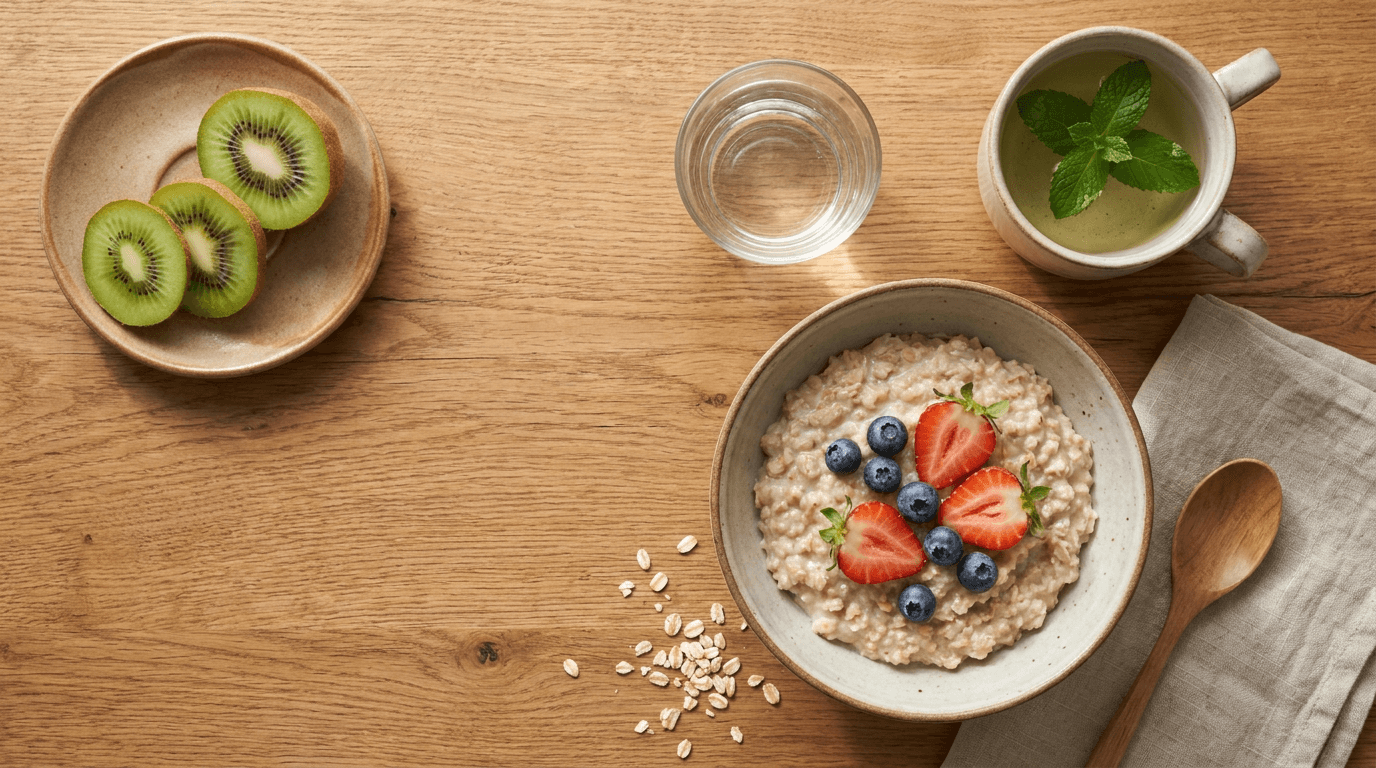
The good news is that a lot of everyday foods are naturally gentle. Proteins like chicken breast, eggs, salmon, and firm tofu are low-FODMAP. Grains like oats, quinoa, and white rice usually sit well. Fruits such as strawberries, blueberries, and kiwifruit are friendly in normal servings, and vegetables like carrot and potato round out plates without trouble. The common triggers to watch early on are onion and garlic, which are high-FODMAP even in small amounts and hide in a surprising number of sauces and stocks.
The point of learning your food thresholds isn't lifelong restriction. It's the opposite: figuring out exactly what and how much you can eat, so your diet ends up as broad and enjoyable as possible.
Stress
The gut-brain axis runs both ways. Stress doesn't just live in your head, it changes how your gut moves and how loudly it signals pain. That's why a stressful week can trigger a flare even when your eating hasn't changed.
You can't delete stress, but you can lower how much it drives your gut. Approaches with real evidence behind them include gut-directed hypnotherapy, cognitive behavioural therapy adapted for IBS, paced breathing, and regular gentle movement like walking. Some people find a warm cup of peppermint tea soothing during a flare, and there's decent evidence peppermint oil can ease cramping. These aren't "it's all in your head" fixes. They work because your head and your gut are genuinely connected.
Sleep
Poor sleep raises gut sensitivity and often shows up as a worse next day: more bloating, more urgency, less patience for it all. Protecting a consistent sleep schedule is one of the least glamorous and most reliable IBS levers there is. If your evenings involve large late meals or a lot of caffeine, easing back on both tends to help both sleep and symptoms.
Why a systematic approach beats guessing
Most people with IBS have already tried cutting things out at random. The trouble with guessing is that FODMAPs stack. You might tolerate a little of one food and a little of another, but eat them in the same meal and cross your threshold. That makes cause and effect maddening to untangle by intuition alone.
A structured protocol solves this by testing one variable at a time. First you calm the system down, then you reintroduce foods deliberately, watching how your body responds to each group at a known serving size. Instead of a shrinking list of "safe" foods, you build an accurate, personal map of what your gut actually tolerates. That map is what turns IBS from a daily guessing game into something predictable.
You can browse serving thresholds for hundreds of foods in the food database to see how this works in practice, with each value tied to published research rather than guesswork.
When to see a professional
Self-management goes a long way, but some things warrant a doctor's attention. Book an appointment if you notice red-flag symptoms such as blood in your stool, unexplained weight loss, symptoms that wake you at night, a family history of bowel disease, or a sudden change in bowel habits after age 50. These aren't typical of IBS and deserve proper evaluation. A registered dietitian is also invaluable for running the low-FODMAP protocol safely, especially the reintroduction phase, so your long-term diet stays balanced and nutritionally complete.
The bottom line
Does IBS go away? Not in the sense of a permanent cure you can count on. But it very often goes quiet, sometimes for long stretches, and it almost always becomes more manageable once you understand your own triggers. Chronic doesn't mean helpless. Between diet, stress, and sleep, you have more control over your day-to-day symptoms than it feels like when you're mid-flare.
If you want to stop guessing and build your personal map of what your gut tolerates, Phase walks you through the whole protocol step by step, with serving thresholds you can trust. Start with Phase and turn IBS into something you manage, not something that manages you.