
Ask anyone whose mother, sister, or father also lives with bloating, cramping, and unpredictable bathroom trips, and one question comes up fast: is IBS hereditary? The honest answer is that irritable bowel syndrome does tend to run in families, but it is not a simple case of inheriting one broken gene. Genetics play a part, yet so do the gut you share with relatives, the environment you grew up in, and the everyday triggers you can actually change.
Is IBS hereditary? What the research actually says
IBS is what scientists call a complex, multifactorial condition. That means no single cause explains it, and no single gene passes it down like eye color. Studies do show that having a first-degree relative with IBS raises your own likelihood of developing it. Twin studies point the same direction: identical twins, who share nearly all their DNA, are somewhat more likely to both have IBS than non-identical twins are.
So there is a genetic signal. But it is a modest one. Researchers have identified several gene variants linked to gut sensitivity, pain signaling, serotonin handling, and how quickly food moves through the intestine. Each one nudges risk slightly rather than deciding your fate. If you inherited a version of a gene that makes your gut nerves more reactive, you may feel normal digestive stretching as pain where someone else feels nothing. That is a real, biological difference, and it is worth naming, because it means your symptoms are not "in your head."
The key takeaway: genes load the dice, they do not throw them.
Family patterns are not only about DNA
Here is where the story gets more useful. When IBS clusters in a family, DNA is rarely the whole explanation. Families also share a lot that has nothing to do with chromosomes.
Shared environment. You likely grew up eating the same meals, on the same schedule, seasoned with the same ingredients. If your family kitchen leaned heavily on garlic and onion, two of the highest-FODMAP foods there are, everyone at that table was exposed to the same gut load, related or not.
Shared stress and habits. Sleep patterns, mealtime stress, how a household copes with anxiety, and even attitudes toward pain are learned. The gut and brain are in constant conversation through the gut-brain axis, so a stressful home environment can shape digestive symptoms across a whole family without a single gene being involved.
Early-life events. A gut infection in childhood (post-infectious IBS is well documented), early antibiotic use, and how your microbiome was seeded at birth all influence long-term gut function. Siblings often share these exposures.
Researchers even ran a clever study comparing spouses of people with IBS. Spouses share no DNA, yet they showed a slightly raised rate of IBS symptoms too, which points squarely at shared environment rather than pure inheritance.
The gut microbiome: inherited, but changeable
Your gut is home to trillions of microbes, and their makeup is partly shaped by family. Babies inherit an initial microbial community from their mother, and household members tend to share microbial signatures for years. People with IBS often show a different microbiome balance than people without it.
This matters because the microbiome sits right at the crossroads of "inherited" and "modifiable." You cannot swap your genes, but you can influence your gut bacteria through diet, fiber, stress management, and sleep. That is a genuinely hopeful piece of the puzzle, and it is one reason diet-based approaches help so many people even when IBS clearly runs in their family.
Why this reframe matters for you
If you have spent time worrying that IBS was simply handed to you and there is nothing to be done, take a breath. The evidence says the opposite. Inherited risk is real but partial, and the biggest levers you can pull day to day are the modifiable ones: what you eat, how you sleep, how you manage stress, and how you respond to your own symptoms.
This is exactly where the low-FODMAP approach comes in. FODMAPs are a group of fermentable carbohydrates that draw water into the gut and get rapidly fermented by bacteria, producing gas. In a sensitive gut, that combination triggers bloating, pain, and irregular bowel habits. FODMAPs do not cause IBS, but they reliably provoke symptoms in people who already have it, whatever their family history. You can read the full breakdown in our low-FODMAP diet guide.
Redirecting your energy to what you can change
Instead of fixating on genes, spend your effort finding your personal triggers. The three-phase FODMAP protocol is built for exactly this: a short eliminate phase to calm symptoms, a structured reintroduce phase to test one FODMAP group at a time, and a lasting personalize phase where you eat the widest diet your gut tolerates.
Along the way you learn which specific foods matter for you. Two people in the same family can have very different triggers. One might react to the fructose in an apple, another to the fructans in wheat, and a third might tolerate both but struggle with lactose.
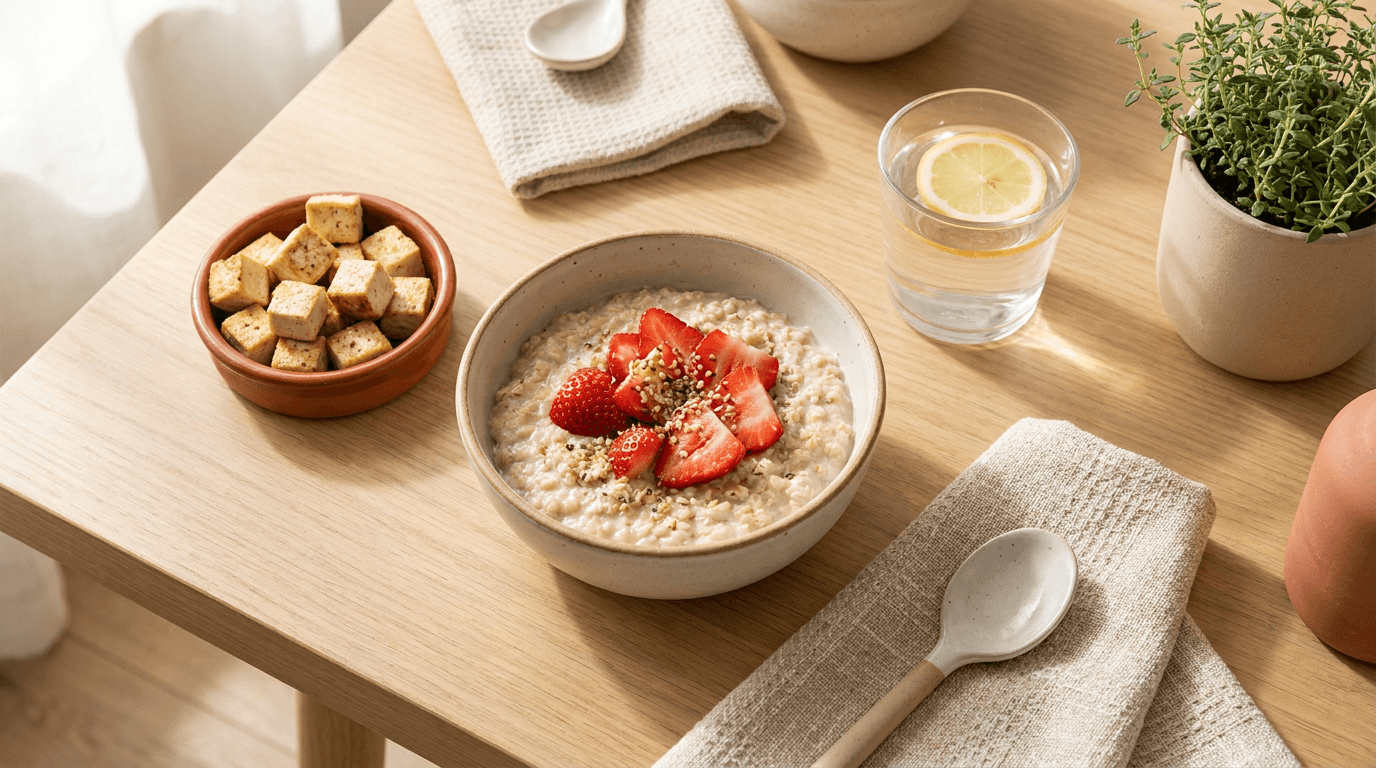
Some naturally gentle staples make the eliminate phase easier:
| Food | Why it helps early on |
|---|---|
| Oats | Filling breakfast base at a modest serving |
| Firm tofu | Plant protein that is low-FODMAP when firm and drained |
| Strawberry | A low-FODMAP fruit for snacks and desserts |
The goal is never a permanently restrictive diet. Over-restriction can starve the very gut bacteria you want to nurture. The goal is clarity: knowing your own thresholds so you can eat with confidence rather than fear.
You can explore serving guidance for hundreds of items in the Phase food database, where every threshold is backed by published research and shown with its citation, so you are never guessing.
The bottom line
So, is IBS hereditary? Partly. Genes contribute a modest amount of risk, family environment and shared habits add more, and your gut microbiome sits somewhere in between, shaped by both your history and your choices. What no part of that story says is that your symptoms are fixed. Family history may explain why IBS showed up, but it does not decide how you feel next month.
If IBS runs in your family, that is useful information, not a life sentence. Talk to a doctor or dietitian to confirm your diagnosis and rule out other conditions, then put your energy where it pays off: understanding your personal triggers and building a diet your gut can live with comfortably.
Ready to find your own triggers instead of blaming your genes? Get started with Phase and work through the FODMAP protocol one step at a time.