
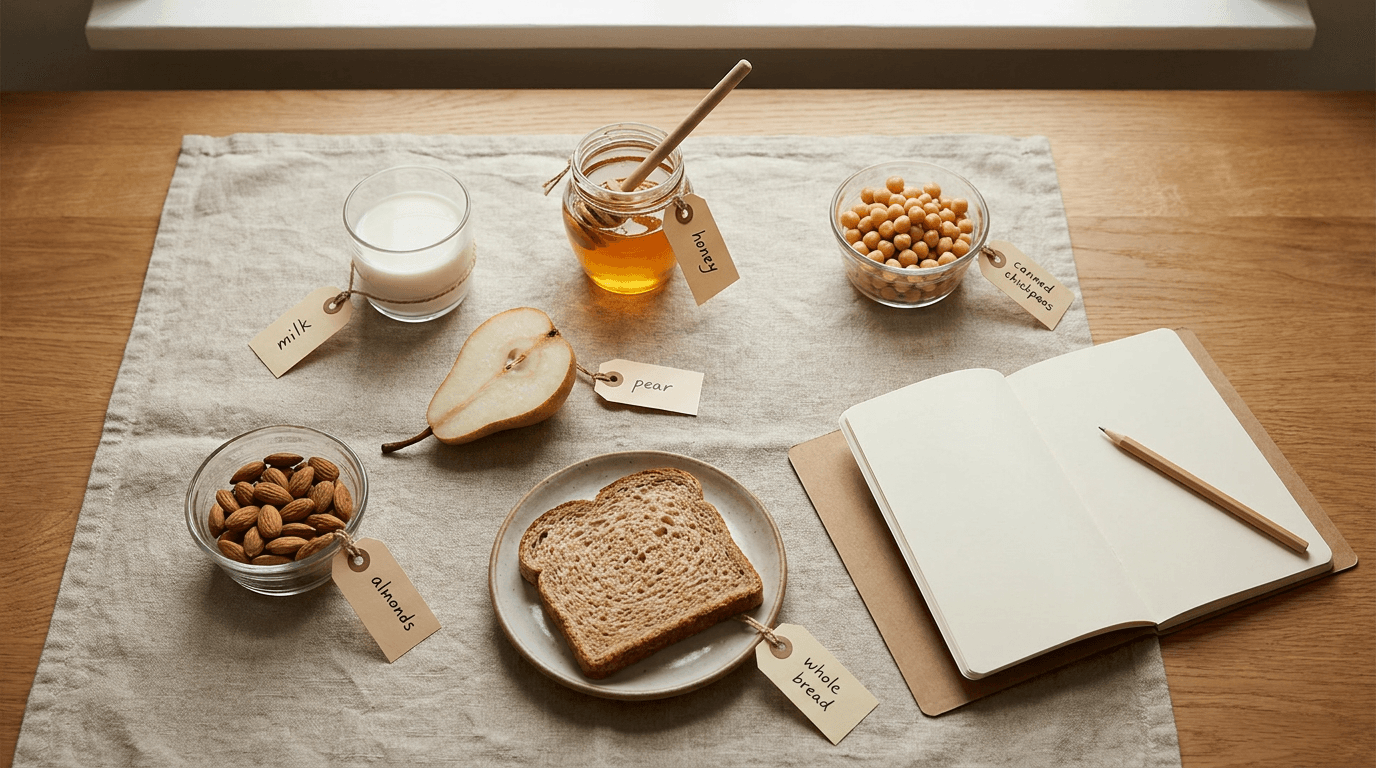
Finishing the elimination phase can feel like a relief and a trap at the same time. Your symptoms are quieter, so why touch anything? Because a restricted diet was never the goal. FODMAP reintroduction — the second phase of the low-FODMAP protocol — is the part where you systematically add foods back, learn which FODMAP groups actually bother your gut, and start rebuilding the widest diet you can comfortably eat. This is where you regain foods, not lose them.
If you're new to the framework, start with the low-FODMAP diet guide for the big picture. This article zooms in on Phase 2: how to run it, a sample schedule, and the mistakes that quietly sabotage people.
Why reintroduction matters more than elimination
Elimination tells you that FODMAPs are involved in your symptoms. It doesn't tell you which ones. FODMAPs are a family of fermentable carbs — fructans, galacto-oligosaccharides (GOS), lactose, excess fructose, sorbitol, and mannitol — and most people react to only a few, not all of them. Staying on a full elimination diet long-term is unnecessary, socially draining, and can shrink the fiber diversity your gut bacteria depend on.
Reintroduction (sometimes called the "challenge" phase) is a series of short experiments. You test one FODMAP group at a time, using a single "clean" test food that contains mostly that one FODMAP. Your gut's response becomes a signal you can trust: tolerate it, and that whole group likely comes back onto your plate.
The core method: one group, three escalating days, then wash out
The standard structure for each challenge looks like this:
- Pick one FODMAP group and one representative test food for it.
- Test over three days, increasing the dose each day (small → medium → larger).
- Watch for symptoms during and shortly after each dose.
- Wash out for 2–3 days afterward — return to your baseline elimination diet — before starting the next group.
The escalating dose matters. Many people tolerate a small serving of a food but react to a large one, and that threshold is useful information. The washout matters just as much: it prevents symptoms from one challenge bleeding into the next and confusing your results.
During each challenge, keep everything else low-FODMAP. If you test lactose with a glass of milk (cow) while also eating a bowl of onion soup, you've contaminated the experiment.
Choosing clean test foods
Good test foods isolate a single FODMAP so the result is unambiguous:
| FODMAP group | Common test foods |
|---|---|
| Lactose | Milk (cow), Greek yogurt |
| Fructose (excess) | Honey, mango |
| Sorbitol | Pear, apricot |
| Mannitol | Cauliflower, mushrooms |
| GOS | Chickpeas, almonds |
| Fructans | Wheat bread, garlic, onion |
Note that garlic and onion are among the most concentrated fructan sources, so many people test wheat first and save garlic and onion for a separate, careful fructan challenge.
A sample reintroduction schedule
Here's what a few weeks might look like. Each challenge runs three days, followed by a washout. If symptoms flare, you stop that challenge early, wait until you're back to baseline, then move on.
| Days | FODMAP group | Test food | Day 1 (small) | Day 2 (medium) | Day 3 (larger) |
|---|---|---|---|---|---|
| 1–3 | Lactose | Milk (cow) | ¼ cup | ½ cup | 1 cup |
| 4–5 | — | Washout (baseline diet) | |||
| 6–8 | Fructose | Honey | 1 tsp | 1 tbsp | 2 tbsp |
| 9–10 | — | Washout | |||
| 11–13 | Sorbitol | Pear | ¼ pear | ½ pear | 1 pear |
| 14–15 | — | Washout | |||
| 16–18 | GOS | Chickpeas | 2 tbsp | ¼ cup | ½ cup |
| 19–20 | — | Washout | |||
| 21–23 | Fructans (wheat) | Wheat bread | ½ slice | 1 slice | 2 slices |
The exact gram amounts vary by person and source, so treat these portions as a general escalation pattern rather than fixed clinical doses. For serving-level detail on any specific food, check its page in the food database.
How to read your results
For each challenge, log three things: what you ate, how much, and what happened (symptom type, severity, timing). A few patterns to interpret:
- No symptoms across all three days → you likely tolerate that group well. It can return to your regular diet.
- Symptoms only on the larger dose → you have a threshold. Small servings are probably fine; large ones aren't.
- Symptoms early and clearly → that group is a likely trigger. Note it and move on; you can retest later.
One caution: a single bad day isn't a verdict. Stress, poor sleep, your menstrual cycle, and other foods all influence IBS symptoms. If a result surprises you, retest that group after a proper washout before drawing conclusions.
Common reintroduction mistakes
Testing more than one group at once. A meal with garlic and honey makes it impossible to know which caused the flare. One group at a time, always.
Skipping the washout. Jumping straight from one challenge to the next lets symptoms overlap. Give yourself the 2–3 baseline days.
Not staying low-FODMAP between challenges. Reintroduction only works against a clean background. If your baseline is noisy, your signals are too.
Quitting after one symptom. Stopping the whole protocol because chickpeas didn't sit well means you never test lactose, fructose, or the others you might tolerate perfectly.
Testing during a stressful week. Try to run challenges when life is reasonably stable so external factors don't muddy the data.
Treating a failed food as banned forever. Tolerance can change. A group you react to now might work in smaller amounts, or after more time. Reintroduction produces a snapshot, not a life sentence.
What reintroduction is building toward
Every challenge you complete adds a piece to your personal map. Tolerate lactose and fructose but react to fructans? Then Greek yogurt, mango, and almonds may come back while you keep onion and wheat bread in smaller portions. That map is the foundation of Phase 3 — personalization — where the aim is the most varied, least restrictive diet your gut allows.
This is genuinely the good part of the protocol. Elimination narrows; reintroduction expands. If any of this feels overwhelming, that's normal, and a registered dietitian can help you structure and interpret your challenges.
Running a multi-week schedule by hand is where good intentions fall apart. Phase builds the whole reintroduction plan for you — sequencing each FODMAP group, timing the washouts, prompting each escalating dose, and logging symptoms so your personal trigger map assembles itself. Get Phase and let the app run the schedule while you focus on eating.