
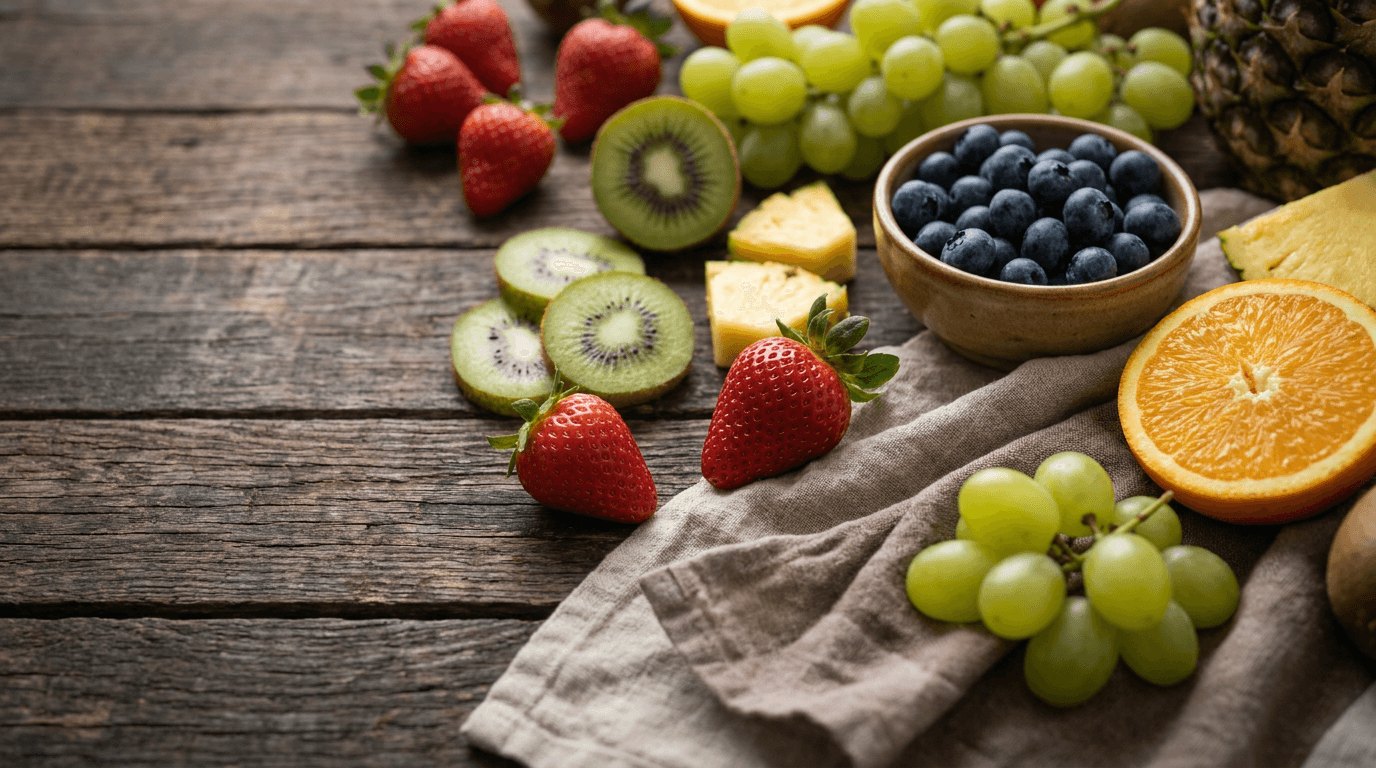
Fruit feels like the safest thing on your plate until it isn't. If you have IBS, a bowl of the wrong fruit can leave you bloated and cramping within the hour, while a different fruit sits perfectly fine. The good news: there's a reliable list of low-FODMAP fruits you can lean on, and the reasons some fruits trigger symptoms come down to two simple culprits you can learn to spot.
Why some fruit upsets your gut
FODMAPs are types of carbohydrate that the small intestine struggles to absorb. When they pass into the large intestine undigested, gut bacteria ferment them (producing gas) and they pull water into the bowel. For sensitive guts, that combination means bloating, wind, cramping, and changes in bowel habits.
Fruit mainly causes trouble through two of the FODMAP groups:
- Excess fructose. Fructose is a natural fruit sugar. Your body absorbs it best when there's roughly an equal amount of glucose alongside it. When a fruit has more fructose than glucose — like apples, pears, or mango — the leftover fructose can overwhelm the gut's transport system and trigger symptoms. This is why "it's just natural sugar" doesn't mean "it's easy on your gut."
- Polyols. These are sugar alcohols — sorbitol and mannitol — found naturally in stone fruits like apricots, cherries, plums, and peaches. They're slowly and incompletely absorbed, so they ferment and draw in water too. (They also turn up in "sugar-free" gum and sweets, which is worth knowing if mystery bloating strikes.)
A fruit can be high in one, both, or neither. That's the whole puzzle in a nutshell.
Low-FODMAP fruits you can rely on
During the strict eliminate phase of the low-FODMAP diet guide, you build meals around fruits that are gentle at normal serving sizes. These are the everyday staples most people tolerate well:
| Fruit | Notes |
|---|---|
| Strawberry | Reliably low; great fresh or blended |
| Blueberries | Easy to portion into oats or yoghurt |
| Kiwifruit | Also a gentle, natural aid for regularity |
| Orange | Citrus is generally low-FODMAP |
| Grapes | Handy, portable, no prep |
| Pineapple | Fresh is well tolerated |
| Raspberry | Fine in small handfuls |
| Cantaloupe | A safer melon choice |
Other dependable options include lemon and lime (mostly used as juice, so amounts are tiny), papaya, passion fruit, and firm bananas. Because they're low in both problem sugars at a normal serving, these fruits give you variety without much guesswork.
High-FODMAP fruits to watch
These are the fruits most likely to cause symptoms in the eliminate phase. You're not banned from them forever — you're pausing them so you can pinpoint what your gut actually reacts to later.
High in excess fructose:
- Apple
- Pear
- Mango
- Watermelon (a double whammy — it's also high in polyols)
High in polyols (the stone fruits):
Also worth flagging: dried fruit of any kind. Drying concentrates the sugars, so even a fruit that's fine when fresh can become a high-FODMAP hit as a handful of dried pieces. Fruit juice is similar — a glass of apple or orange juice packs the fruit sugar from several pieces into one quick drink, with none of the fibre to slow it down.
Ripeness changes the answer: the banana rule
Here's the detail that trips people up. With some fruit, ripeness changes the FODMAP content — and bananas are the classic example.
An unripe (firm, still-green) banana is low-FODMAP and a solid staple. As it ripens, its starches break down into sugars, and a fully ripe, spotty banana climbs high enough in one FODMAP group to trigger some people. If bananas seem to bother you, try them firmer and greener before you write them off entirely.
The lesson generalises: the state of a fruit matters, not just its name. Fresh versus dried, ripe versus firm, whole versus juiced — each can move the same fruit from "fine" to "trouble."
Serving size is everything
This is the single most important thing to understand about fruit and FODMAPs: almost no fruit is unlimited, and almost no fruit is truly banned. FODMAP content is about dose.
A small serving of a given fruit might sit comfortably, while a large bowl of the very same fruit tips you over your gut's threshold. Two low-FODMAP fruits eaten together in one sitting can also add up — a phenomenon called stacking — and push your total FODMAP load past the point your gut tolerates, even though each fruit alone would've been fine.
Practical ways to keep servings sensible:
- Stick to one portion of fruit at a time, and space fruit across the day rather than eating it all at once.
- Treat fruit as roughly a small handful or half a cup as a starting point, then adjust to what your body tells you.
- Don't stack multiple fruits into one giant smoothie — that's an easy way to overshoot without realising.
Because the exact safe amount differs by fruit, it's worth checking specific thresholds rather than guessing. Phase's food database shows the serving size that keeps each fruit low-FODMAP, with the published research behind the number — so "a small serving" becomes an actual, checkable amount for the fruit in front of you.
Bringing fruit back in the reintroduce phase
The eliminate phase isn't the finish line — it's the setup. Once your symptoms settle, the reintroduce phase is where fruit gets interesting. You test one FODMAP group at a time in controlled amounts to see what your gut can actually handle.
Say you test fructose using mango, or polyols using apricot. If you tolerate it, that whole category of fruit likely opens back up for you. Many people discover they can enjoy fruits they'd been avoiding, often in moderate servings, once they know their personal limit. That's the entire point: the goal isn't the narrowest diet, it's the widest one your gut tolerates.
This is also why keeping a simple food-and-symptom log matters. Fruit reactions can be dose-dependent and easy to misattribute, so a record helps you separate a true trigger from an unlucky coincidence — or from stacking too much fruit in one go.
A quick reality check
FODMAP tolerance is genuinely individual, and IBS overlaps with other conditions. The low-FODMAP approach is a structured way to manage symptoms and find your triggers — not a cure, and not something to stay in the strict phase forever. If your symptoms are new, severe, or come with red flags like unexplained weight loss or bleeding, see your doctor. And because the eliminate phase is restrictive, working with a registered dietitian makes the whole process safer and more effective.
Fruit doesn't have to be a gamble. Learn the two culprits — excess fructose and polyols — respect ripeness and serving size, and you'll build a rotation of low-FODMAP fruits you can actually trust.
Want the exact safe serving for any fruit, backed by the research? Get Phase and check any food in seconds.