
Right now your belly is bloated, cramping, and loud, and every plan for the day feels suddenly negotiable. Maybe you're eyeing the nearest bathroom, or lying curled on your side willing it to stop. If you're mid IBS flare up, take one slow breath: this is miserable, but it is temporary, and there are things you can do in the next hour that genuinely help.
This is a calm, practical plan for exactly that moment. No lectures, no fear. Just what to do while your gut settles.
What an IBS flare up actually is
An IBS flare up is a stretch of hours or days when your usual symptoms spike: cramping, bloating, gas, urgency, diarrhea, constipation, or that swinging back-and-forth between them. Your gut isn't damaged during a flare. It's oversensitive and over-reactive, sending pain signals and moving in ways it normally wouldn't.
Flares happen for a mix of reasons, and often more than one at once:
- Food triggers — commonly high-FODMAP foods (fermentable carbs that draw water into the gut and ferment), large or fatty meals, alcohol, or a lot of caffeine.
- Stress and the gut-brain axis — your gut and brain talk constantly through nerves and hormones, so a stressful week, poor sleep, or anxiety can set off symptoms with no food to blame.
- Routine disruption — travel, skipped meals, illness, or hormonal shifts around your period.
Knowing it's a temporary flare, not a crisis, is itself part of the treatment. The calmer your nervous system, the faster your gut tends to follow.
The first-hour action plan
1. Eat gently, don't fast
It's tempting to stop eating entirely. Try not to. Skipping meals can make cramping and irregular movements worse. Instead, downsize to small, plain, easy-to-digest, low-FODMAP food.
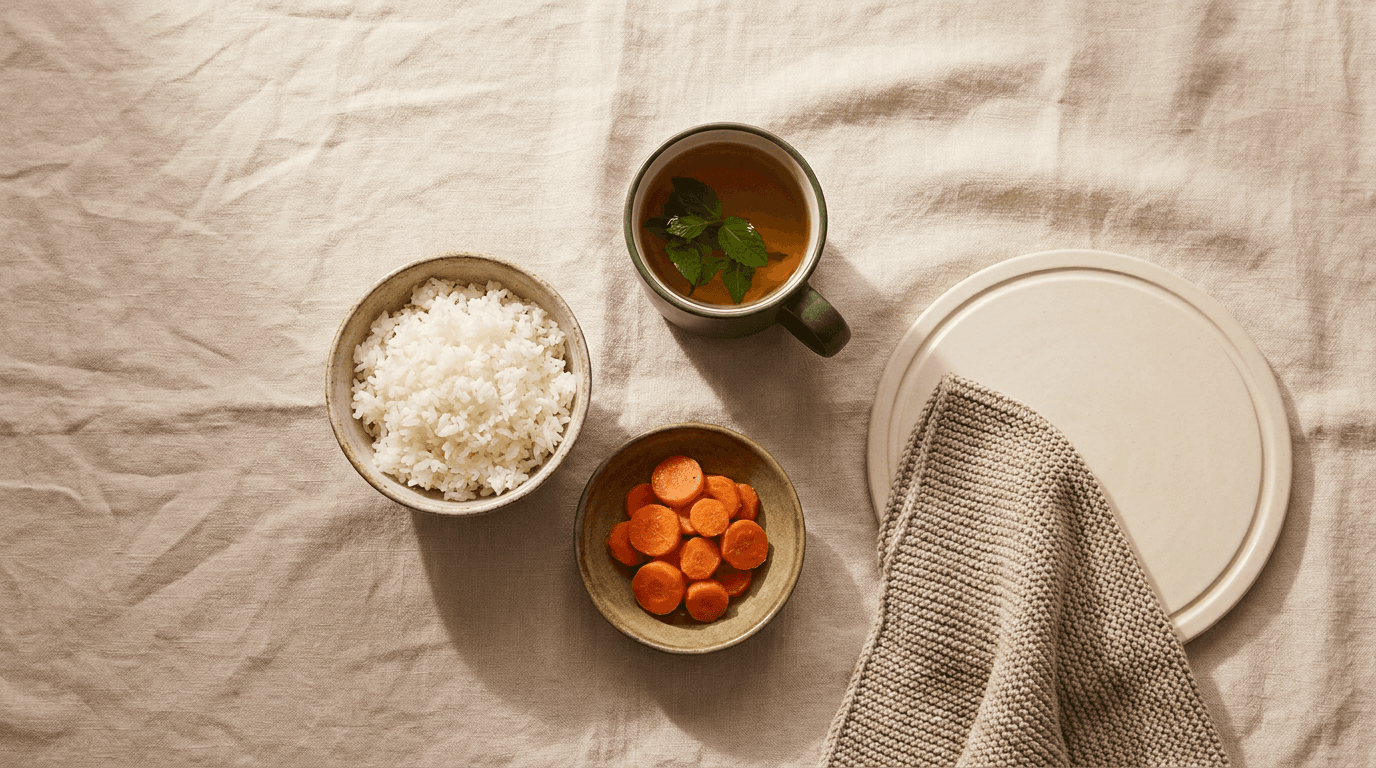
Reach for simple things like plain white rice, a small bowl of oats made with water or lactose-free milk, cooked carrot, scrambled eggs, or a little plain chicken breast. If you want fruit, a firmer unripe banana is gentler than a very ripe one. Keep portions modest and let your gut do a little work at a time.
Just as important is what to skip for now: high-FODMAP heavy hitters like garlic and onion, rich or greasy meals, alcohol, fizzy drinks, and big hits of caffeine. You can return to your normal range once the flare passes.
2. Sip, slowly
Diarrhea and cramping both benefit from steady fluids. Sip water throughout the hour rather than gulping a large glass. Warm drinks can feel especially soothing, and peppermint tea is a long-standing comfort for IBS bellies because peppermint helps relax the gut muscle. Ease off strong coffee and very sugary drinks while you're flaring.
3. Use heat
A hot water bottle or heat pad on your abdomen is simple and genuinely effective. Warmth relaxes tense gut muscles and dials down the pain signals your oversensitive gut is firing off. Fifteen to twenty minutes against your stomach or lower back can take the sharpest edge off cramps.
4. Move, a little
You don't need a workout. Gentle movement helps trapped gas shift and encourages your gut to settle. A slow walk around the block, some easy stretching, or lying on your back and drawing your knees toward your chest can all relieve pressure. Skip anything intense; the goal is to loosen, not to push.
5. Calm the gut-brain axis
Because your gut and brain are wired together, settling your nervous system directly settles your gut. When a flare hits, your body often tips into fight-or-flight, which makes cramping and urgency worse. You can interrupt that loop.
Try slow breathing: in through your nose for a count of four, out gently for a count of six, for a few minutes. The long exhale is the part that tells your body it's safe. Warmth, a quiet room, and permission to pause the day all work in the same direction. This isn't "just relax" hand-waving; calming the stress response is one of the most reliable levers you have during a flare.
It will pass
Here's the reassurance worth holding onto: flares end. Most ease within hours to a couple of days as the trigger clears and your gut calms down. In the moment it can feel endless, but your body is built to return to baseline, and it will.
Be gentle with the rest of your day. Lighter meals, earlier night, less on your plate literally and figuratively. You're recovering, not failing.
A quick honesty note: if a flare is unusually severe or long, or you notice bleeding, unexplained weight loss, fever, or symptoms that keep waking you at night, those are reasons to see a doctor rather than ride it out. IBS is real and manageable, but those red flags deserve a proper look.
Flares follow patterns, and you can find yours
The frustrating thing about a flare is that it can feel random. It usually isn't. Most flares trace back to some combination of a specific food, a stressful stretch, a skipped meal, or a bad night's sleep, and those combinations tend to repeat for each person.
That's the real opportunity once this flare passes. The clinical low-FODMAP approach is designed to surface your personal triggers in a structured way rather than by guesswork. If you're new to it, start with our low-FODMAP diet guide to see how the three phases fit together, and browse the food database to check where everyday foods actually stand.
The pattern only becomes visible when you track it. Logging what you ate, how stressed you were, and how you slept around each flare turns scattered bad days into a map of your own triggers, so future flares get rarer and less severe.
One more thing, for later: if someone at home cooks for you, they're probably scared of making this worse and too kind to say so. When this flare passes, send them our cook's guide — it's written for them, not you, and it makes shared dinners feel safe again.
That's exactly what Phase is built to do: check any food's serving thresholds against published research, log your meals in seconds, and connect the dots between what you eat and how you feel. When you're ready to stop guessing and start seeing your patterns, download Phase and let your next flare teach you something instead of just ruining your day.